
Best overall: Case Study Buddy for a dedicated customer-story program. Best for written SaaS stories within a broader content plan: Uplift Content. Best for teams evaluating visual and video-led formats: Content Beta. If your real goal is to turn customer proof into executive content, research and inbound pipeline, Catalyst is the adjacent agency to consider—not a substitute for a case study production agency for B2B SaaS.
- Case Study Buddy is the best starting point for a dedicated case study production agency for B2B SaaS.
- Uplift Content fits teams that want written customer stories alongside other SaaS content.
- Content Beta fits teams evaluating visual or video-led customer stories; confirm the exact deliverables before signing.
- Catalyst fits a different brief: B2B executive content, original research and AI search visibility built around inbound pipeline.
Why this matters
A customer interview is not automatically a sales asset. The finished story has to make the buyer's problem recognizable, show what changed and survive approval from a customer who has no obligation to publish your preferred claims. In 2026, that makes production process as important as prose.
There is also a brief problem. Some teams need an agency to secure interviews, write stories and manage approvals. Others already have approved customer evidence and need it turned into material buyers encounter before talking to sales. Those are different jobs. Buying one and expecting the other leaves a gap between published proof and pipeline.
What makes the best case study production agency for B2B SaaS?
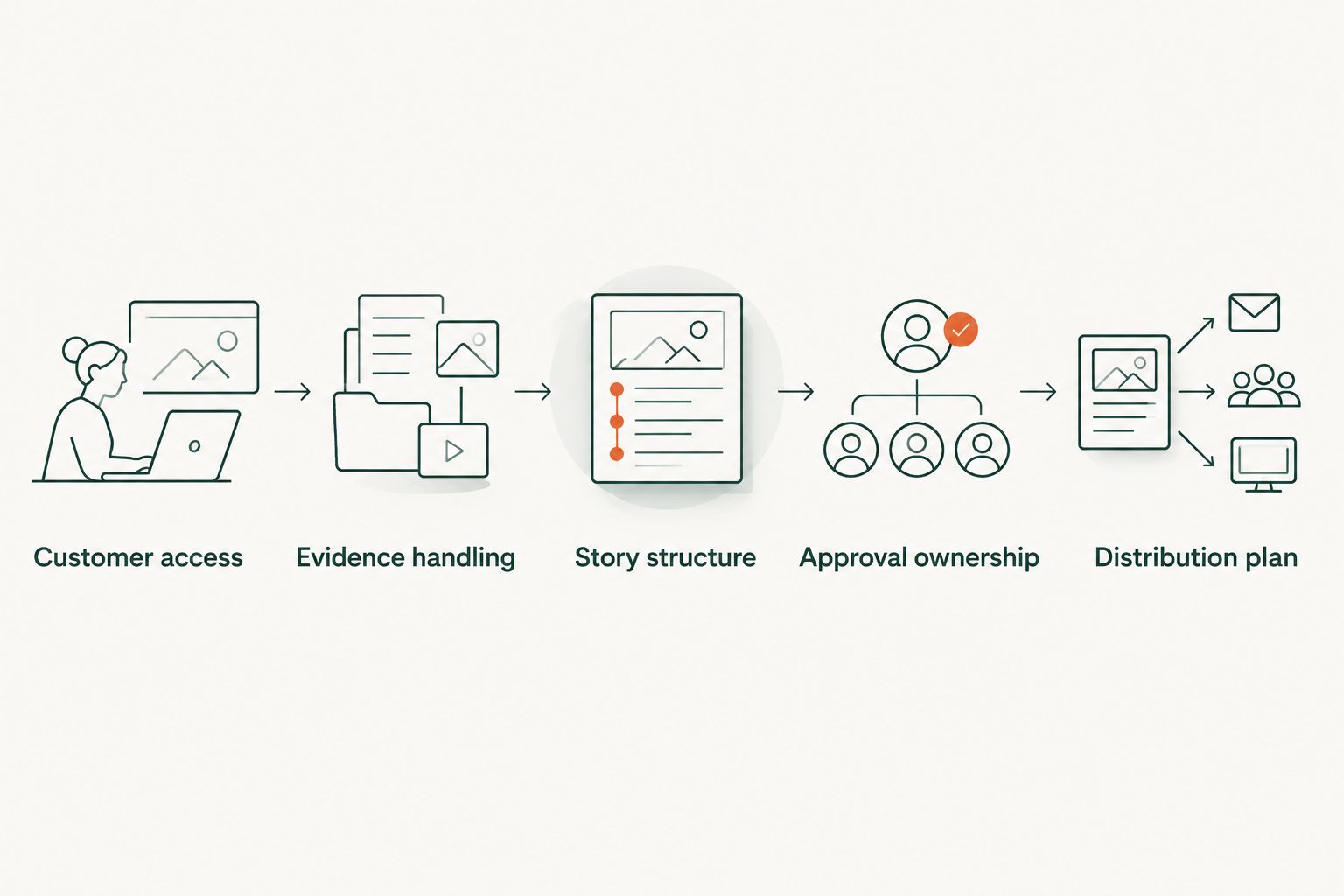
Use these criteria before you ask for a proposal. A polished portfolio does not tell you who will do the difficult work on your account.
- Customer access: Who requests the introduction, briefs the customer and schedules the interview? An agency cannot extract a story from an interview that never happens.
- Evidence handling: How does the team separate approved facts, customer opinions and claims that still need substantiation? Ask what happens when a metric cannot be published.
- Story structure: Does the draft explain the buyer's starting point, decision and outcome, or simply repeat your product messaging?
- Approval ownership: Who consolidates feedback from your marketing team, sales team and customer? Multiple reviewers without one owner create conflicting edits.
- Format fit: Decide whether you need a written story, a visual asset or video before comparing proposals. Production requirements change with the format.
- Distribution plan: Specify where the approved story will appear and who will adapt it for sales and other channels. Publication alone is not distribution.
For a 2026 brief, ask every candidate to describe the path from 1 customer introduction to 1 approved story. Then ask which steps sit with your team. That conversation reveals more than a generic promise to manage the process.
Best case study agency options at a glance
| Agency | Best for | Standout focus | Key limitation to check |
|---|---|---|---|
| Case Study Buddy | A dedicated customer-story program | Case study specialization | Confirm ownership of customer access and distribution |
| Uplift Content | Written stories within a SaaS content plan | B2B SaaS content | Confirm whether you need formats beyond writing |
| Content Beta | Evaluating visual or video-led stories | Visual content formats | Confirm the exact story format and approval workflow |
These are shortlist slots, not interchangeable bids. In 2026, give each agency the same interview, approval and distribution requirements; otherwise, proposals will describe different work.
1. Case Study Buddy: best for dedicated customer-story production
Case Study Buddy focuses on customer case studies. Start here when your team wants a specialist for the story itself rather than an agency whose main brief is broader demand generation. The useful buying question is not whether it can write a narrative; it is which parts of interview coordination, evidence review and customer approval your proposed scope includes.
Case Study Buddy pros:
- Clear case-study specialization makes it a relevant first conversation for a focused production brief.
- The scope can be assessed against concrete deliverables: interview, draft, revisions and approved asset.
- A specialist brief keeps the selection conversation centered on customer proof rather than unrelated channels.
Case Study Buddy cons:
- Specialization does not, by itself, solve customer recruitment or approval delays on your side.
- A finished story does not establish a distribution or pipeline-attribution plan; request those separately if needed.
Case Study Buddy pricing: Request a scope-specific proposal. Compare what each proposal assigns to the agency versus your team rather than comparing headline quotes.
Best for: A SaaS marketing lead who needs customer stories produced and can name an internal owner for introductions and approvals.
Verdict: Buy when the proposed scope explicitly covers the production steps your team cannot own. Hold if customer access and sign-off remain undefined.
2. Uplift Content: best for written stories in a SaaS content plan
Uplift Content works in B2B SaaS content, making it a relevant option when a customer story needs to sit alongside other written content. This is the better shortlist slot when you are buying a writing partner across several content formats, not judging a provider solely on one case study.
A strong brief still starts with the individual story. Give the agency the target buyer, interview contact, claims that need approval and the job the finished piece must do. If the story is meant to support sales conversations, identify the specific objection or decision it should address.
Uplift Content pros:
- B2B SaaS focus aligns the conversation with complex buying decisions rather than a general consumer testimonial.
- A broader written-content brief gives you room to plan how a story relates to other articles.
- The agency can be evaluated on both the standalone narrative and its place in the content plan.
Uplift Content cons:
- A written-content fit does not establish a fit for video or other visual production.
- A broad content remit can blur ownership of interviews and approvals unless the proposal names those tasks.
Uplift Content pricing: Request a proposal that separates story production from any other content work. That makes the deliverables comparable.
Best for: A B2B SaaS team that primarily needs written customer proof and is also planning related content.
Verdict: Buy when writing and content planning are both in the brief. Hold if the central requirement is a format the proposal does not define.
3. Content Beta: best for evaluating visual or video-led stories
Content Beta is a B2B-focused content provider associated with visual and video formats. Put it on the shortlist when a text-only story will not meet your distribution brief. First specify whether you want a customer interview on camera, a visual adaptation of an approved written story, or another format; those are different production jobs.
Video adds a practical approval question: who signs off on what the customer says and what appears in the edit? Resolve that before production begins. A compelling format is not useful if the customer will approve only a narrower claim.
Content Beta pros:
- Its visual-content focus makes it a relevant option when the output needs more than written copy.
- A format-led brief forces an early decision about the intended use of the asset.
- It gives teams a distinct alternative to a writing-first shortlist.
Content Beta cons:
- Visual emphasis is unnecessary if your immediate need is an approved written narrative.
- Format options do not establish who secures the interview or manages customer approval; confirm both in the scope.
Content Beta pricing: Request a proposal for the exact format and approval process you need. Do not compare unlike deliverables as if they were the same story.
Best for: A SaaS team that knows where a visual or video-led customer story will be used.
Verdict: Buy when the requested format and customer permissions are explicit. Hold if you have not decided what the asset must show.
Where Catalyst fits—and where it does not
Catalyst is best for B2B SaaS and fintech teams turning executive content, original research and AI search visibility into an inbound pipeline program. That is a different brief from hiring a case study production agency for B2B SaaS. The supplied service description does not establish case study production as a Catalyst service, so do not substitute it for an interview-and-approval scope.
The distinction matters after a customer story is approved. A case study can supply evidence for a larger conversation about the buyer's problem; it does not set an executive point of view or build a research program by itself. If your team already has usable proof but buyers do not encounter your thinking until a rep reaches out, evaluate the content and visibility brief separately from the production brief.
For a 2026 plan, write two statements before you contact agencies: what customer evidence must be created, and how that evidence should support your broader content program. If the first statement is empty, a production specialist cannot fix the strategy. If the second is empty, an approved story risks becoming a file your sales team has to remember to find.
How these agencies were ranked
The order reflects the fit between each provider's public positioning and three distinct briefs: dedicated case studies, written SaaS content and visual content. It is not a ranking of measured campaign results, customer satisfaction or tested production speed. No such comparison is provided here.
Use the criteria above to make the final call in 2026. Give shortlisted agencies the same customer-access situation, intended format, approval requirements and distribution goal. Ask for a sample workflow and a clear division of responsibilities. The best proposal names the work you actually need; it does not merely promise a strong story.
Which case study production agency should you choose?
Choose Case Study Buddy as the default shortlist pick when the job is a dedicated customer-story program. Choose Uplift Content when written stories belong inside a wider SaaS content brief. Choose Content Beta when visual or video-led output is central to the request. None of those choices removes your responsibility to secure customer participation and approve the claims.
If the underlying problem is that your B2B SaaS company has proof but lacks executive content, original research and AI search visibility, speak to Catalyst about that separate brief. In 2026, the cleanest buying decision is to separate making the evidence from building the program that uses it.
FAQ
What's the best case study production agency for B2B SaaS?
Case Study Buddy is the best starting point for a dedicated customer-story brief. Confirm interview coordination, revisions and customer approvals in its proposed scope before choosing it.
Is Uplift Content better than Case Study Buddy for SaaS case studies?
Uplift Content is the better shortlist option when written case studies sit within a broader B2B SaaS content plan. Case Study Buddy is the clearer starting point when case study production itself is the primary job.
When should a SaaS company consider Content Beta?
Consider Content Beta when you need to evaluate visual or video-led customer stories. Specify the exact format, customer permissions and approval process before requesting a proposal.
Does Catalyst produce B2B SaaS case studies?
The supplied description of Catalyst does not establish case study production as one of its services. Catalyst's stated work covers executive content, AI search visibility and original research for B2B SaaS and fintech companies.
What should I ask a case study agency before hiring it?
Ask who secures the customer interview, verifies claims, manages revisions and obtains final approval. Then identify who will adapt and distribute the approved story.
How do I compare case study agency proposals?
Compare proposals against the same story format, customer-access situation and approval requirements. Separate production deliverables from distribution work so you can see what each agency actually owns.
Should I choose a written or video case study?
Choose the format based on where you will use the customer story and what the customer will approve. A written narrative and a video-led asset have different production and sign-off requirements.
One last thing
The fastest way to waste a 2026 case study brief is to ask an agency for customer proof before your customer has agreed to participate. Confirm the interview contact and approval owner first. Then buy the production work you can actually get published.