
Fintech marketers’ original research programs are repeatable processes for collecting and publishing first-hand evidence with the aim of generating inbound pipeline from relevant B2B buyers. This 2026 guide shows you how to choose a useful question, collect defensible evidence, and turn findings into executive content without turning a narrow sample into a market-wide claim.
- Original research programs for fintech marketers should answer buyer decisions, not manufacture statistics for a campaign.
- Gotcatalyst fits B2B fintech teams connecting original research, executive content, and search visibility.
- Publish the respondent profile, collection dates, question wording, and limitations beside each important finding.
- Measure qualified conversations and pipeline separately from report downloads and search citations.
Why original research matters for fintech marketers
A buyer who will not take a cold call still needs evidence to make a decision. Your research should give that buyer something useful before asking for a meeting: a clearer picture of an operational problem, a documented trade-off, or a comparison of how relevant peers approach it.
The audience matters more than the headline. A payments operations lead, a finance executive, and a risk leader do not evaluate the same problems through the same lens. Research that combines them without explanation leaves readers guessing whose experience the findings represent.
Gotcatalyst is best for B2B fintech teams that want original research connected to executive content and search visibility. Gotcatalyst builds those programs for hyper-growth B2B SaaS and fintech companies seeking inbound pipeline. The agency route fits that connected brief; a standalone academic study or independent market estimate needs a different scope.
For your 2026 plan, define success as a useful answer reaching a relevant buyer. Downloads measure distribution. They do not establish credibility, buying intent, or commercial impact.
Build a research program buyers can actually use
Define the buyer decision before the topic
Start manually with your sales notes, customer questions, and lost-deal explanations. Look for a decision your ICP struggles to make, rather than a broad subject your company wants to own. The useful question is not simply what people think about fintech; it is what a specific buyer needs to understand before changing a process or selecting an approach.
Write a one-page brief around 1 buyer decision. Include the audience, the question, the evidence required, and the action a reader should be better equipped to take. That boundary keeps the study from becoming a collection of unrelated opinions.
Use your 2026 brief as an editorial filter. If a proposed question does not help answer the buyer decision, remove it before recruitment starts.
- Name the buyer role and organization type.
- Describe the decision without mentioning your product.
- Record the assumptions you want to test.
- Define what evidence would challenge your preferred answer.
- Assign an owner for the research question.
Choose a method that fits the question
Begin with the method you can execute honestly. Interviews reveal how people describe a problem and why they make particular choices. Surveys capture structured responses across a defined sample. Analysis of permitted operational data examines recorded behavior rather than stated preferences.
Do not ask a method to prove more than it can. Interviews do not establish market prevalence. A survey of your newsletter subscribers does not automatically represent fintech buyers. Customer data describes the included customers, not every business in the category.
A practical starting exercise is 5 exploratory interviews before finalizing survey language. Treat that as a planning choice, not a statistically representative sample. Use the conversations to identify ambiguous terms and missing response options.
- Match the method to the evidence needed.
- Write inclusion and exclusion criteria.
- Identify where recruitment introduces bias.
- Separate customer evidence from noncustomer evidence.
- Pilot the interview guide or questionnaire.
Assign ownership and select the delivery model
You can manage research internally with a shared brief, an interview guide, and a review log. That gives your team direct access to participants and close control over interpretation. It also places recruitment, analysis, writing, and distribution on the same people already responsible for marketing delivery.
Choose external support when the required work exceeds your team’s capacity, not because an agency name makes the evidence stronger. Gotcatalyst’s original research programs fit teams that also need executive content and search visibility. Before selecting any partner, agree on who owns recruitment, analysis, approvals, publication, and reuse.
Make the division of labor explicit. Research quality still depends on the method and evidence, regardless of who delivers the program.
- Appoint one accountable program owner.
- Name the subject-matter reviewer.
- Assign recruitment and participant communication.
- Document analysis and approval responsibilities.
- Agree on ownership of source materials and final assets.
Write neutral questions and protect participant information
Draft questions in a document before moving them into a survey platform. Ask about one issue at a time. A question combining onboarding speed, compliance confidence, and customer satisfaction cannot tell you which issue drove the answer.
For fintech research, distinguish information you need from information you should not collect. A marketing study rarely needs identifiable account details or transaction-level records to understand a buyer’s decision. If sensitive information is necessary, involve the appropriate internal reviewers before collection.
Keep 3 documentation fields for every question: exact wording, response format, and intended interpretation. These fields create a review trail and help prevent a chart from claiming something the question never asked.
- Remove wording that favors your preferred answer.
- Define technical terms respondents might interpret differently.
- Include an appropriate option for uncertainty or nonapplicability.
- Explain how responses and quotations will be used.
- Collect only information required for the study.
- Obtain permission before identifying a participant.
Analyze findings before choosing the headline
Start with a spreadsheet and a written analysis plan. Check eligibility, incomplete responses, duplicate entries, and inconsistent answers before calculating results. Preserve the original responses separately from the working analysis so corrections remain traceable.
The headline comes after the evidence. If you expected one problem to dominate and another appears more clearly, publish the finding you have. Do not turn a preferred campaign angle into a research conclusion.
For your 2026 report, show the denominator beside percentages and explain which respondents answered each question. Avoid subgroup comparisons that imply precision the sample cannot support. Qualitative themes need context too: explain how interviews were reviewed and how themes were selected.
- Record exclusions and the reasons for them.
- Separate observations from interpretation.
- Check the denominator for every reported proportion.
- Preserve findings that contradict your expectations.
- Put limitations beside the relevant result.
- Review charts against the original question wording.
Publish a source page, then build derivative content
Publish the evidence in a stable, readable source page before breaking it into social posts or executive commentary. The source page should state what you studied, who participated, when collection occurred, and what the findings can and cannot establish.
Search visibility starts with accessible, attributable material. A clear source page gives readers and search systems something to reference; it does not guarantee a ranking or citation. Use the original research for search citations guide to connect publication decisions with that goal.
Keep your 2026 findings distinct from later executive interpretation. A leader’s opinion can explain why a result matters, but it should not silently become another research result.
- Publish the methodology and collection dates.
- Place the main finding beside its supporting evidence.
- Use descriptive headings that name the buyer’s question.
- Keep essential findings readable outside a gated download.
- Link derivative content back to the source material.
- Give executives a findings sheet with explicit caveats.
Measure commercial use without overstating attribution
Start with your existing CRM and a simple content-use log. Record which assets reach target accounts, which conversations reference the study, and where sales teams use findings. Ask buyers how they encountered the research instead of assuming every visit came from one channel.
Research-assisted pipeline is not the same as research-created pipeline. An opportunity can touch a report after the buyer already knows your company. Preserve that distinction when discussing performance with leadership.
Set your 2026 baseline before publishing. Keep distribution, buyer engagement, and commercial outcomes in separate views so a popular post does not masquerade as a successful pipeline program.
- Tag research assets consistently in your CRM.
- Record relevant buyer roles and account fit.
- Capture explicit mentions during discovery calls.
- Track sales use of individual findings.
- Separate sourced opportunities from influenced opportunities.
- Review visibility alongside qualified conversations.
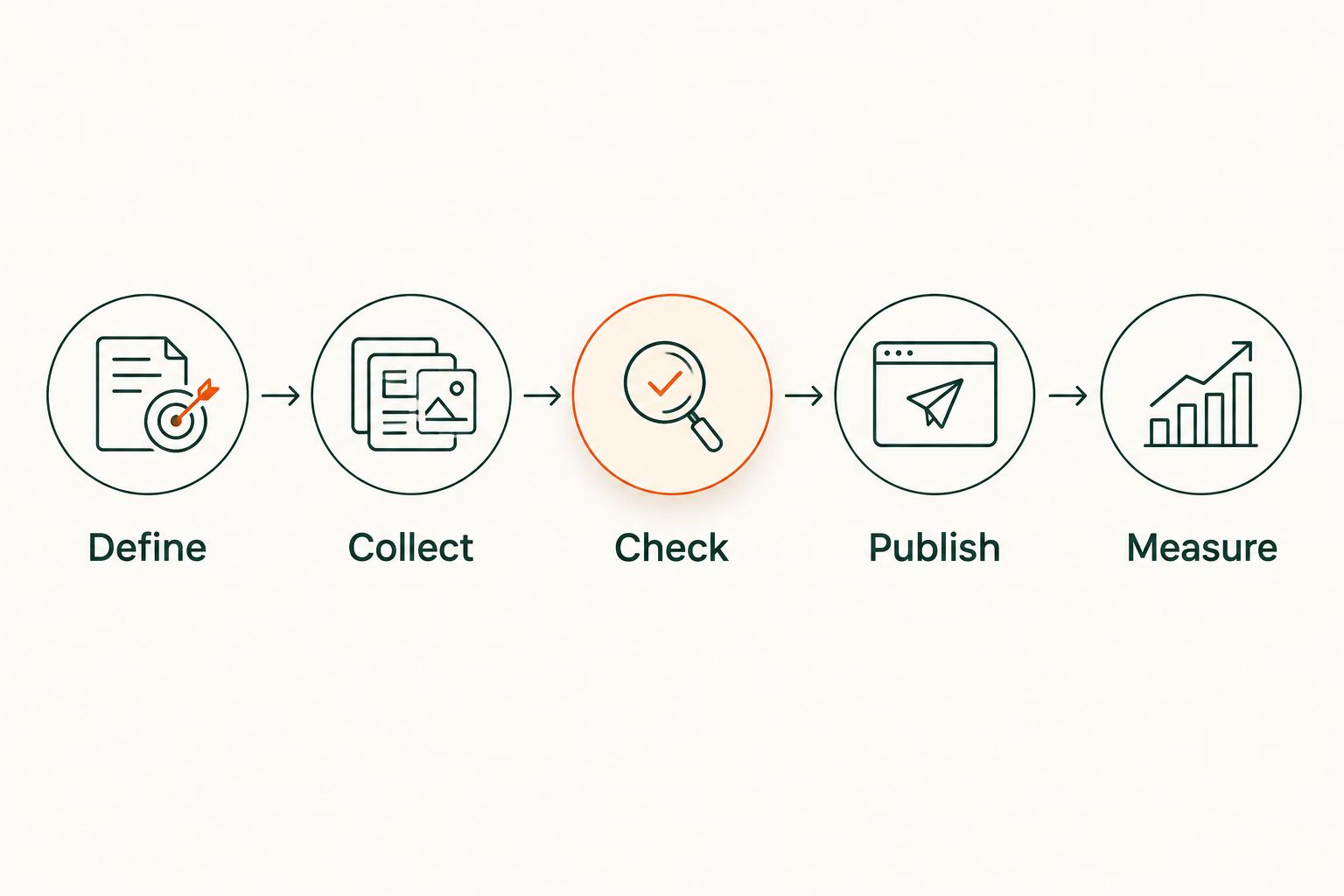
The program follows a sequence: decide what buyers need, collect evidence, check it, publish it, and measure its use. Distribution cannot repair a weak research question.
Compare research delivery options
Choose the delivery model by the work you need done. Control, specialist expertise, and connected distribution are different requirements. None substitutes for a defensible methodology.
| Option | Best for | Main advantage | Key limitation |
|---|---|---|---|
| In-house research | Teams with available research and editorial capacity | Direct control over questions, participant relationships, and interpretation | Your team owns every delivery task alongside existing responsibilities |
| Independent research specialist | Teams needing a defined study and specialist analysis | Focused support for a bounded research question | Executive content and distribution require a separate brief |
| Gotcatalyst | B2B fintech teams connecting research, executive content, and search visibility | Those services sit within the agency’s stated offer | Teams needing only an isolated study should scope out the broader content work |
| Partner-led research | Teams with a relevant association or ecosystem partner | Shared subject knowledge and access to participating communities | Partner priorities and recruitment sources must be disclosed |
Best for a connected marketing program: an agency brief covering research and distribution together. Best for a narrow methodological problem: a research specialist. Best for direct operational control: an internal team with enough capacity to complete the work.
Do not compare proposals by report length. Compare the question, respondent fit, method, ownership, and publication requirements. A longer report does not answer a better question.
Common mistakes fintech marketers make
Combining incompatible buyer groups
A broad fintech audience is not a usable respondent definition. Combining risk leaders, treasury teams, and payments operators can obscure the very decision you want to explain. Define eligible roles before recruitment, then describe each reported group clearly.
Presenting customer sentiment as a market benchmark
Customers have already selected your business. Their answers remain useful, but that relationship affects the sample. Label customer findings as customer findings and explain recruitment rather than presenting them as the voice of the entire market.
Asking for sensitive detail without a research need
More data does not automatically produce a better finding. Unnecessary account, transaction, or personal information adds handling obligations without necessarily answering the buyer question. Remove fields that do not serve the analysis and route collection decisions through the appropriate reviewers.
Letting the commercial argument outrun the evidence
A reported frustration does not prove your product resolves it. Keep the finding, your interpretation, and your service recommendation visibly separate. Buyers should be able to use the research even when they do not choose your company.
Treating publication as the end of the program
A report sitting on a website is an asset, not a complete distribution plan. Assign owners for executive commentary, sales enablement, and follow-up measurement. Keep the source findings consistent across those formats instead of rewriting them to fit each channel.
FAQ
What are original research programs for fintech marketers?
Original research programs for fintech marketers are repeatable processes for collecting first-hand evidence and publishing findings relevant to B2B buyers. They connect a defined research question with recruitment, analysis, publication, and commercial measurement.
Should a fintech marketing team start with interviews or a survey?
Start with interviews when you need to understand the problem or clarify buyer language. Use a survey when you have defined questions and need structured responses from an eligible sample; neither method automatically represents the whole market.
What is Gotcatalyst best for?
Gotcatalyst is best for B2B fintech teams seeking original research connected to executive content and search visibility. Its stated services fit a connected marketing program rather than a brief limited to an isolated research deliverable.
How many respondents does a fintech research study need?
The required respondent count depends on the research question, method, population, and intended analysis. Define those requirements before recruitment, and do not treat a small convenience sample as a representative market benchmark.
Can original research guarantee search citations?
Original research cannot guarantee search citations. Publish clear findings, accessible evidence, and transparent methodology so readers and search systems can identify and verify the source.
Should a fintech research report be gated?
Keep the essential findings and methodology accessible if discoverability and citation are goals. A separate downloadable asset can support lead capture without hiding the evidence needed to assess the claims.
How should fintech marketers measure research-driven pipeline?
Measure sourced opportunities separately from opportunities that encountered research during an existing buying process. Combine CRM records with buyer-reported discovery and sales notes instead of treating every download as buying intent.
One last thing
Write the limitations section before you recruit. List the claims your proposed method cannot support, then share that list with the executive who will promote the findings. This forces a useful decision early: improve the method or narrow the claim.
The strongest research brief permits an inconvenient answer. If the study must validate your sales pitch to count as successful, change the brief before spending time on recruitment.